Compiled by HolidayLetContracts from the sources listed below, checked on 5 November 2026. We sell the templates linked on this page.
Holiday let fire safety in the UK: regulations, alarms and the risk assessment
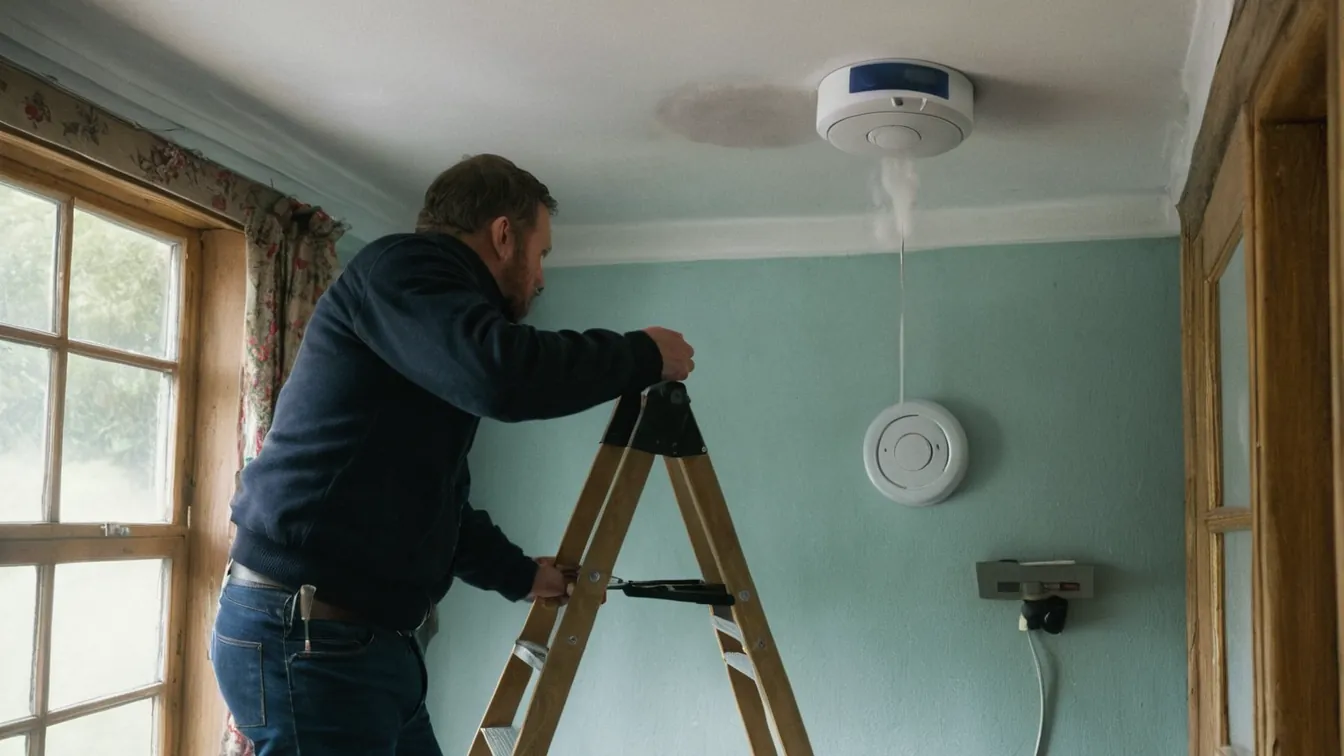
If you take paying guests in England or Wales, the Regulatory Reform (Fire Safety) Order 2005 makes you the responsible person: you must carry out a fire risk assessment, record it, and keep fire safety measures working. Official guidance for small lets expects interlinked smoke alarms, a heat alarm in the kitchen and exits that open without a key. Scotland has a similar duty under the Fire (Scotland) Act 2005.
Which fire law applies to your holiday let?
In England and Wales, the Regulatory Reform (Fire Safety) Order 2005 covers premises that provide accommodation for paying guests, including self-catering cottages and flats. The Home Office and Welsh Government guides say the responsible person is likely to be the owner, letting agent or whoever controls the premises.
In Scotland, the Fire (Scotland) Act 2005 requires the person who controls the premises to provide fire safety measures, and fire safety is a mandatory short-term let licence condition. Your local fire and rescue service enforces the law and may inspect, but it will not write your risk assessment for you.
The fire risk assessment
The Home Office guide says you must carry out a suitable and sufficient fire risk assessment and keep a record of it, including the findings, and ideally who did it. It must be specific to your property.
For a small let you can usually do it yourself by following the official guide. The English and Welsh guides cover single premises of ground, or ground and first floor, sleeping up to 10 people with no more than four first-floor bedrooms, plus individual flats. Larger or more complex buildings should use the sleeping accommodation guide or a competent assessor.
In Scotland, the licence guidance says to assess the fire risk, put the measures in place, keep the assessment under review and keep good records. Annex 2 of the Scottish sleeping accommodation guidance is aimed at secondary lets with no more than 10 guests.
Fire safety checklist for a small holiday let
These are the main measures the official guides for small paying guest accommodation recommend. Your own risk assessment decides what your property needs.
| Measure | What the guidance says | Where it comes from |
|---|---|---|
| Smoke alarms | In hallways, corridors, staircases, lounges, dining rooms and bedrooms, all interlinked | Home Office and Welsh Government guides |
| Heat alarm | One in every kitchen, interlinked with the smoke alarms | Home Office and Welsh Government guides |
| Alarm type | Mains powered with battery backup (Grade D1); sealed battery alarms (Grade F1) only as a short-term measure | Home Office guide |
| Alarm testing | Test monthly and replace alarms periodically | Home Office guide |
| Carbon monoxide | An alarm in each room with an appliance that burns gas, oil or solid fuel | Welsh Government guide; Scottish licence guidance requires CO alarms |
| Exit doors | Easy to open from inside without a key, such as a thumb turn | Home Office and Welsh Government guides |
| Internal doors | Solid, well-fitting doors are often acceptable; hollow core doors normally need 30-minute fire doors | Home Office and Welsh Government guides |
| Candles | Do not provide candles, tea lights or ethanol burners, and have a policy banning them | Home Office and Welsh Government guides |
| Furniture | Upholstered furniture and mattresses must meet the 1988 furniture fire safety regulations | Home Office guide; Scottish licence guidance |
Do you need fire extinguishers in a holiday let?
Not always. Both the English and Welsh guides say guests should not be expected to use firefighting equipment and that getting out is the safest thing to do. The Home Office guide says self-catering hosts may wish to provide a small extinguisher or fire blanket in the kitchen, while the Welsh guide says there is no need to provide such equipment in self-catering premises.
Both guides say that if staff work at or regularly visit the property, firefighting equipment should be provided and staff trained to use it.
Escape routes and what to tell guests
Escape routes must lead as directly as possible to a place of safety, and an inner room (one you can only leave through another room) should not be used for sleeping unless it is on the ground floor and has direct access to a door or escape window that leads to a place of safety clear of the building. A ground-floor escape window must be easy to reach and open wide enough for an able-bodied person to get out, and guests with limited mobility should not sleep in a room whose escape relies on a window. Upstairs escape windows are not treated as a safe means of escape for paying guests. Keeping doors closed at night helps slow the spread of smoke.
The Home Office guide says guests should be told to leave by the nearest exit if a fire breaks out. Put the escape route, exit doors, how to call the emergency services and the full address and postcode in your guest information pack, and repeat the candle ban in your house rules.
Keeping it current
Review your fire risk assessment when anything changes, such as a new layout, more beds or new appliances, and keep the record with your other certificates. A short check between stays catches flat alarm batteries, blocked exits and missing guest information before the next arrival.
For the wider setup steps, including gas and electrical checks, see how to start a holiday let.
Get the free Holiday Let Fire Safety Walk-Round Log: 16 questions and a signed declaration, emailed to you as a print-ready form.
Free template
Get the print-ready Holiday Let Fire Safety Walk-Round Log
A print-ready log for the quick fire safety check between stays: alarms tested, exits clear, doors closing, candles removed and guest information in place. Free, and yours to keep.
Frequently asked questions
Do I need a fire risk assessment for a holiday let?
Yes, if you take paying guests in England or Wales. The Regulatory Reform (Fire Safety) Order 2005 requires a suitable and sufficient fire risk assessment, and the Home Office guide says you must keep a record of it. Scottish hosts must assess fire risk under the Fire (Scotland) Act 2005.
Do holiday let smoke alarms need to be interlinked?
The official guides for small paying guest accommodation say all smoke and heat alarms should be interlinked, so every alarm sounds when one detects fire. Mains powered alarms with battery backup are preferred.
Are fire extinguishers required in a holiday cottage?
Not always. Guests are not expected to fight fires. The Welsh guide says there is no need for them in self-catering premises, the English guide says you may wish to provide them, and both say to provide them where staff are present.
Can I do the fire risk assessment myself?
For a small, simple property, yes. The official guides are written so owners can do it by following the steps. For larger or more complex buildings, use the sleeping accommodation guide or a competent fire risk assessor.
Sources
- Making your small paying guest accommodation safe from fire, Home Office, GOV.UK
- Fire safety risk assessment: sleeping accommodation, GOV.UK
- Make your guest accommodation safe from fire, Welsh Government
- A guide to making your guest accommodation safe from fire (PDF), Welsh Government
- The Regulatory Reform (Fire Safety) Order 2005, legislation.gov.uk
- Short term lets licensing scheme part 1: getting ready to apply, Scottish Government
- Fire safety guidance for existing premises with sleeping accommodation, Scottish Government
- Letting out a self-catering holiday home in England: rules and regulations, GOV.UK
Protect your property. Welcome guests with confidence.
Guest terms, deposit rules and house rules agreed at booking, so a bad weekend is handled by the paperwork.
Hosts who run the let as a business.
These articles are general guidance for UK holiday let owners and hosts, not legal, tax or insurance advice. Holiday let rules differ between England, Scotland, Wales and Northern Ireland, so check the position for your property. Our documents are editable templates to adapt to your own lets.